Composting
How to Compost
Your garden refrigerator bed comes with a built-in composting compartment, the freezer section. It is completely pest-proof and helps expedite the composting process by maintaining moisture and heat.
It takes about 4 to 8 months for the compost and food scraps to completely break down. You will need to turn and mix this compost about once a month, rotating the broken-down parts from the bottom to the top. If your compost appears dry, add some water; if your compost is soupy and has too much water, you'll want to add brown grass clippings or other dry leafy materials to help soak it up.
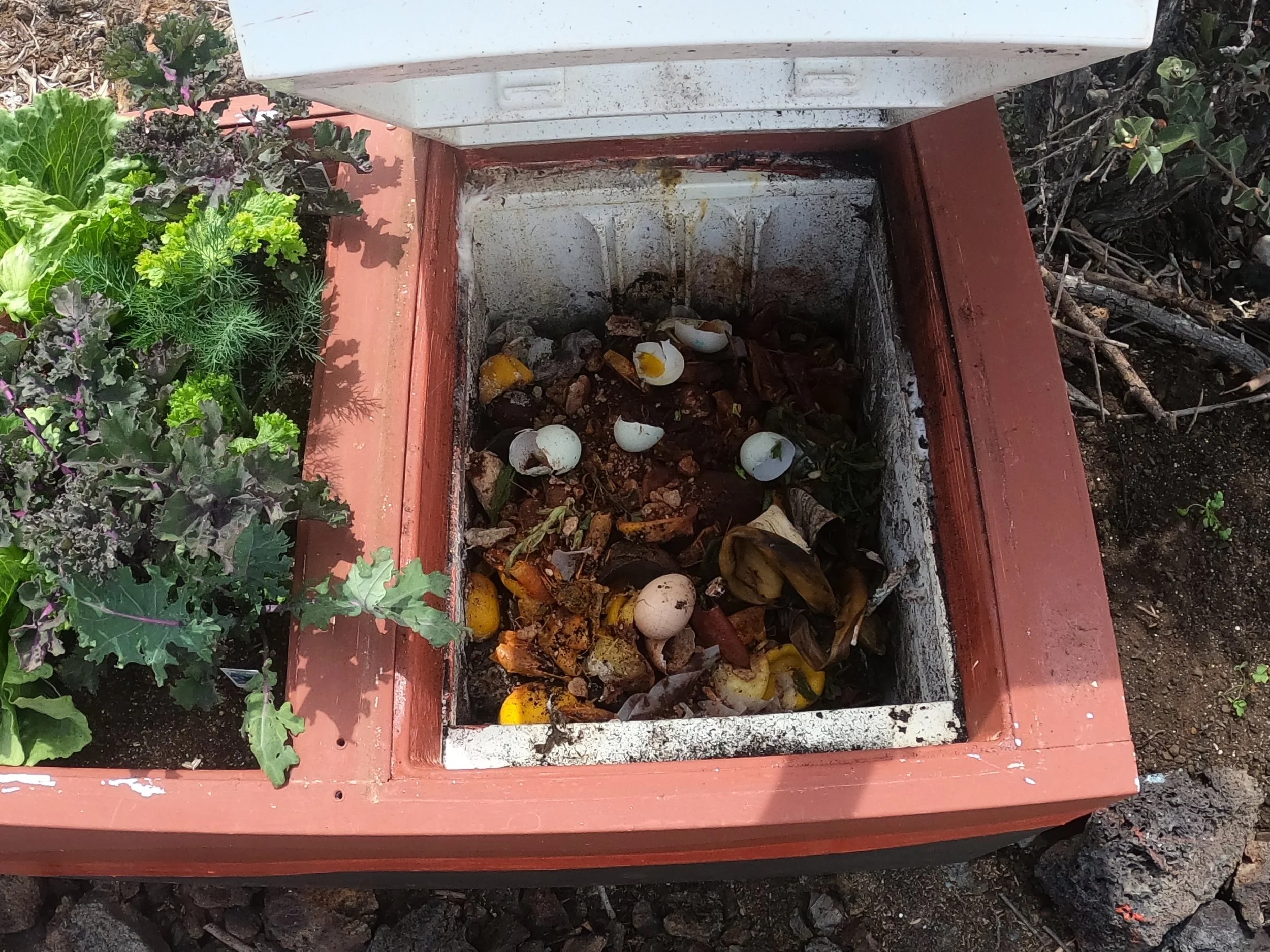
Open composter demonstrating lid functionality.What to Compost
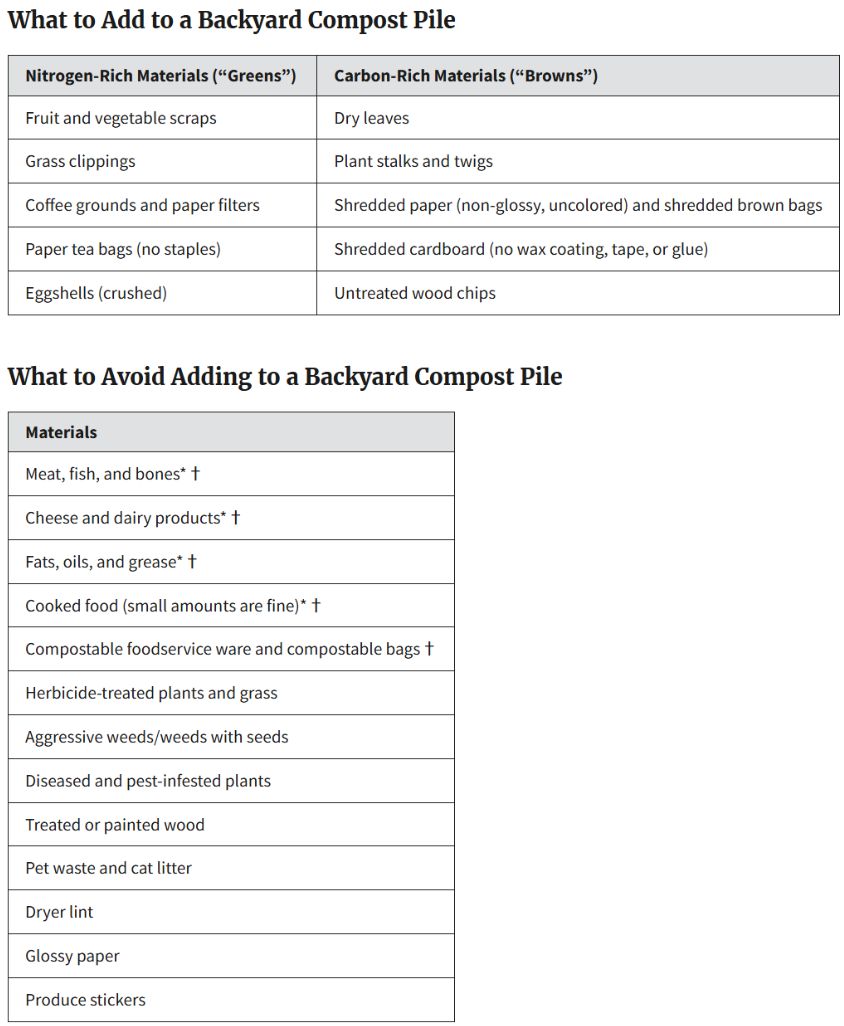
The best way to feed your composter is with quality compost, like banana peels, coffee grounds, eggshells, and any leaves or plant bits from your garden that you can't use. Do not compost things like meat, cheese, dairy products, onions, garlic, or most weeds from your yard, but other plants like cut grass can be great additions to your composting compartment.
This is the EPA's full list of compostable and non-compostable things. If you are ever unsure if something is compostable, look it up.
How to use Compost
You may find that some of your compost is ready, while there are still large bits, such as mango pits, avocado pits, or other items that are slow to break down. You can use a large wire grate to shake the usable compost into a box, and hold the large pieces of food waste that have not broken down behind, so you can return them to the composter. Once you have nice quality dark brown compost, you can add it to your garden by digging a small hole or using a hole left behind from a recently harvested plant. Gently bury the compost. You should do this one to two times a year. In the spring it can be a good idea to blend some compost with fresh soil to refurbish your garden. Consider adding some fertilizer to support your plants' nutrient needs.
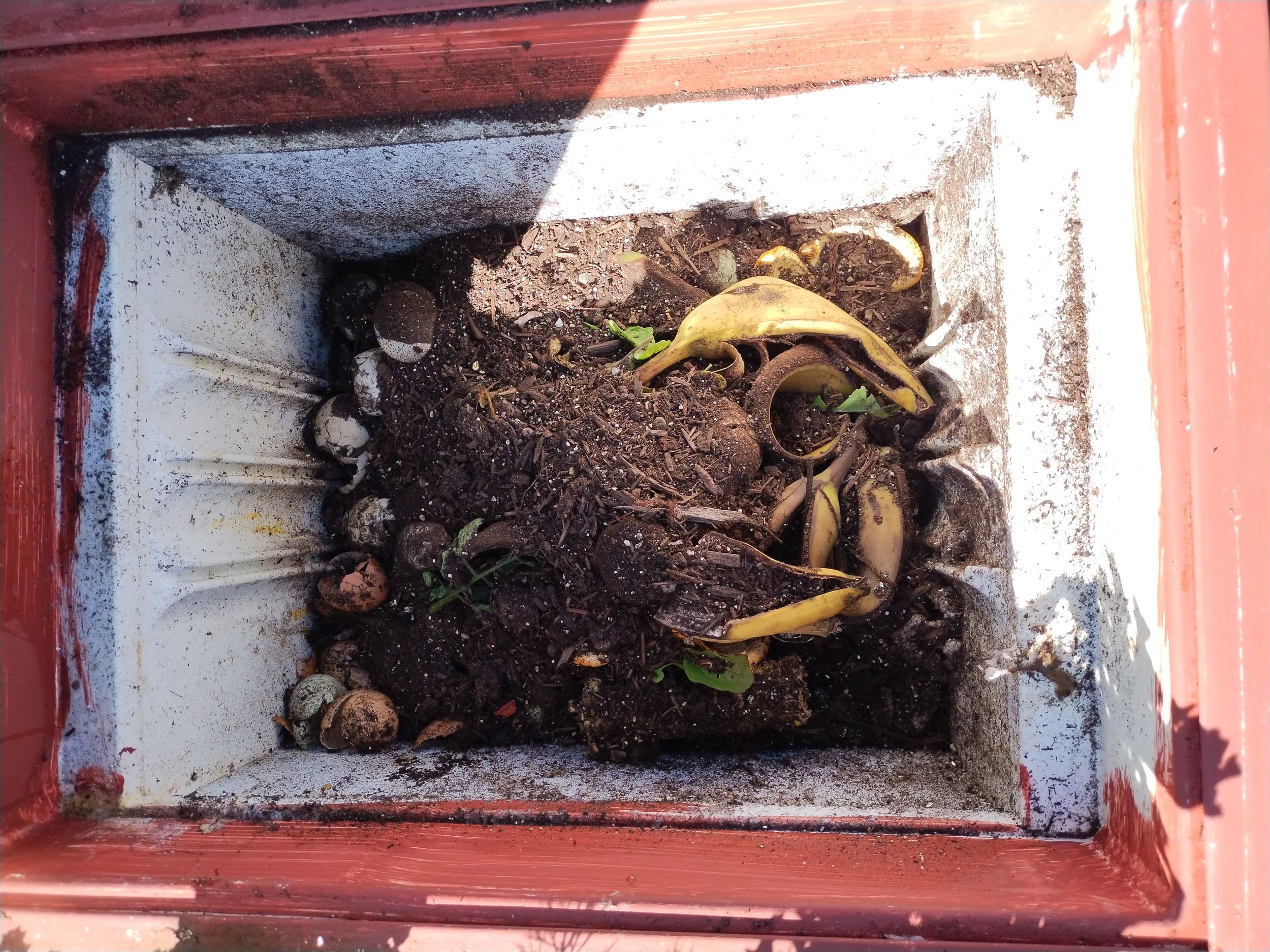
Well broken down compost in the compost compartment.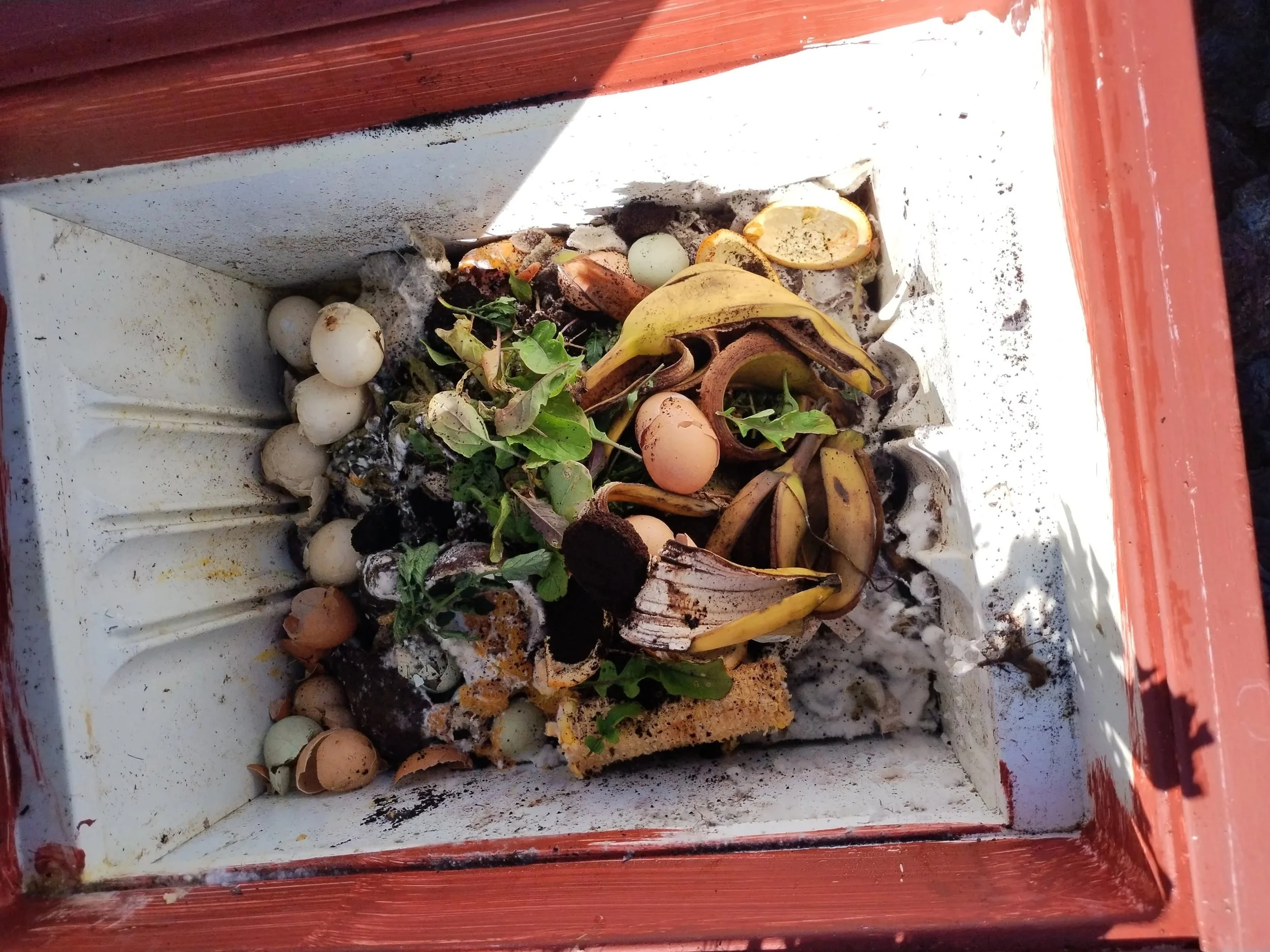
Freshly filled, not broken down compost in the compost compartment.