Pest Management
How to Look for Pests
Pests can include bugs, mildew, fungus, or anything else that's attacking your refrigerator garden. It is important to pay close attention to your plants with daily checks. You’ll be able to spot problems before they get out of hand. During nightly watering, you should inspect plants on the top and bottom of every leaf, especially where you see small holes in the leaves, discoloration, or strange mildew.
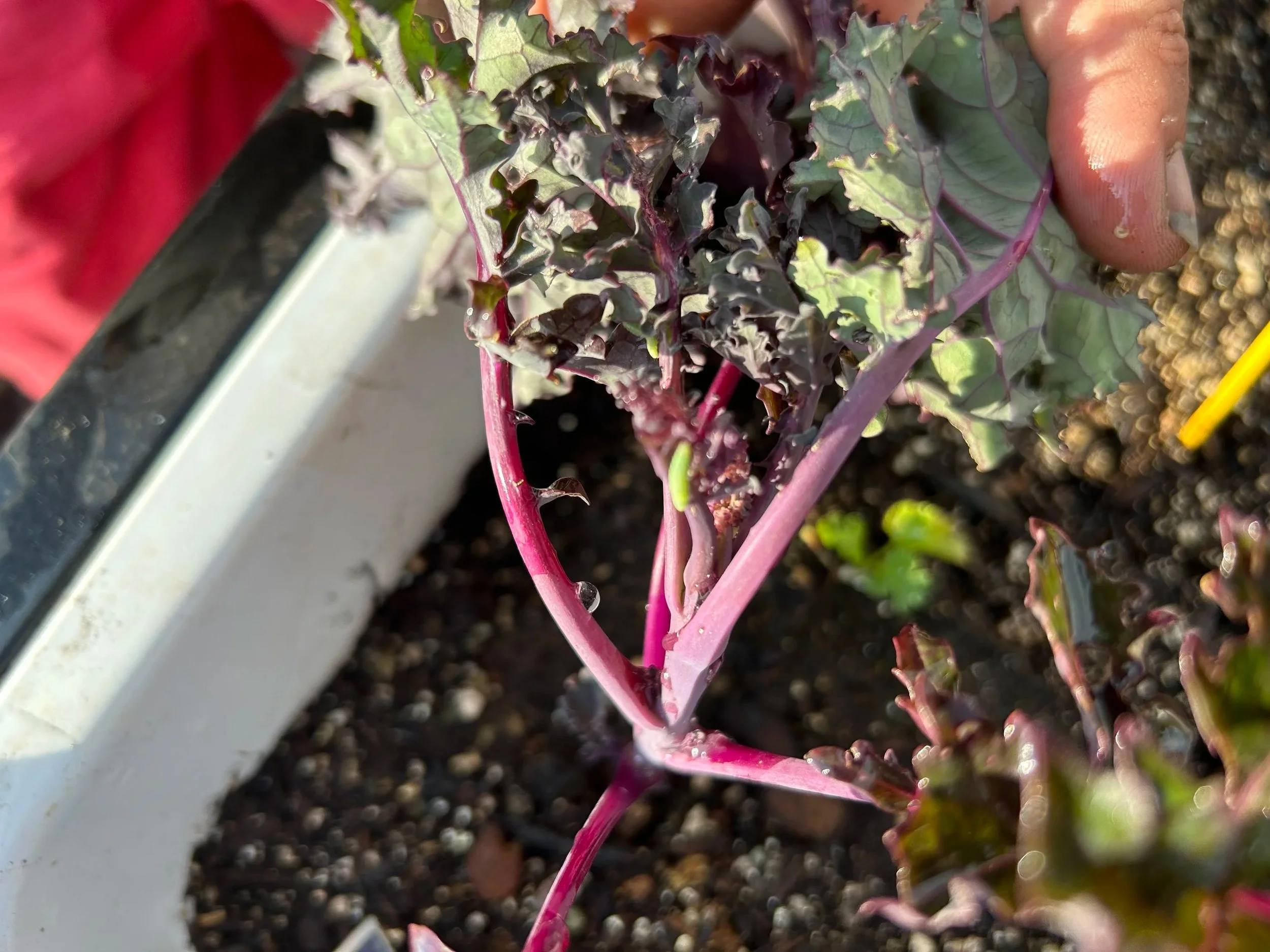
A kale leaf with a caterpillar on it.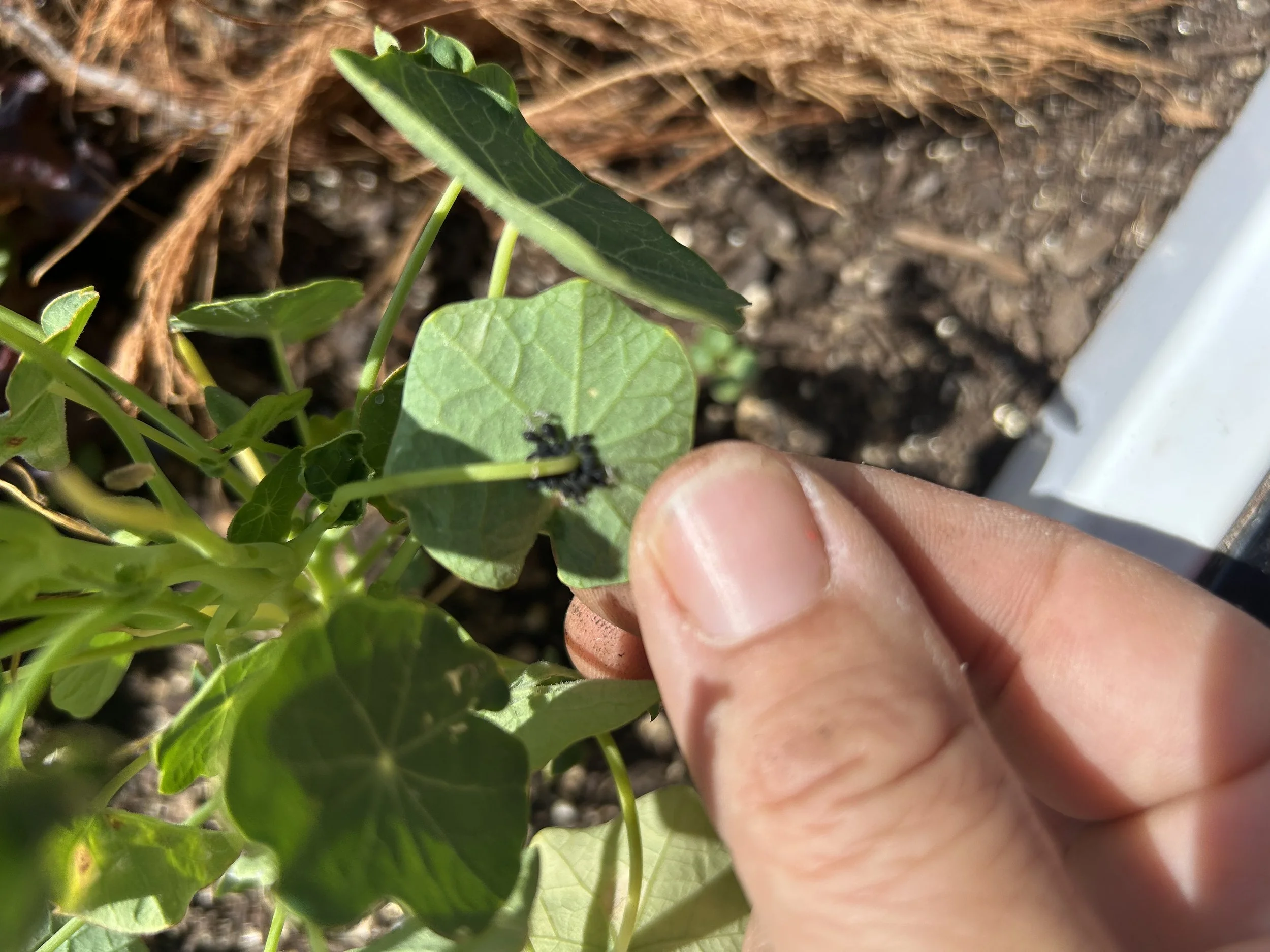
A nasturtium leaf with bug eggs on it.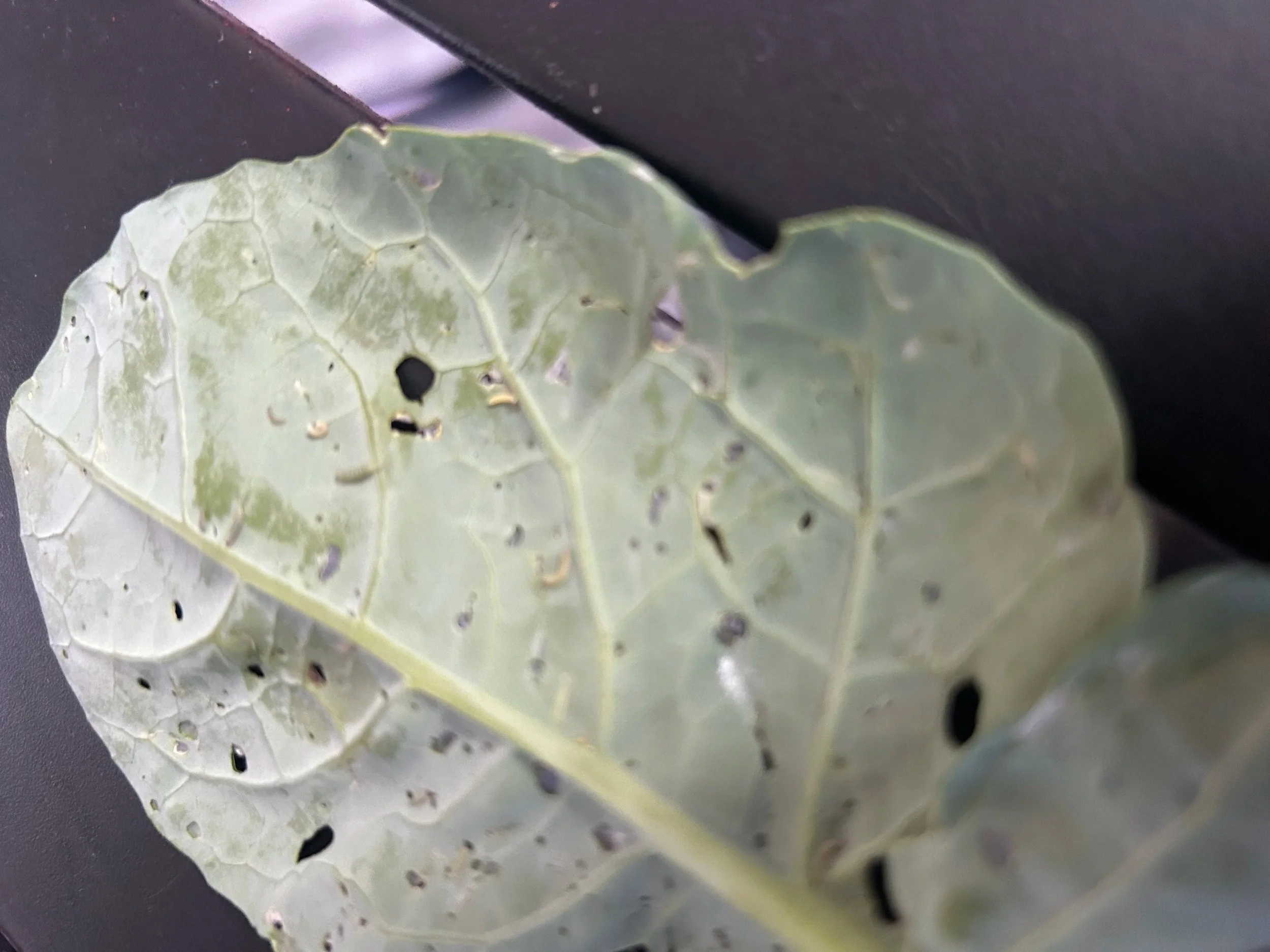
A Broccoli leaf with bugs on it.How to Deal With Pests
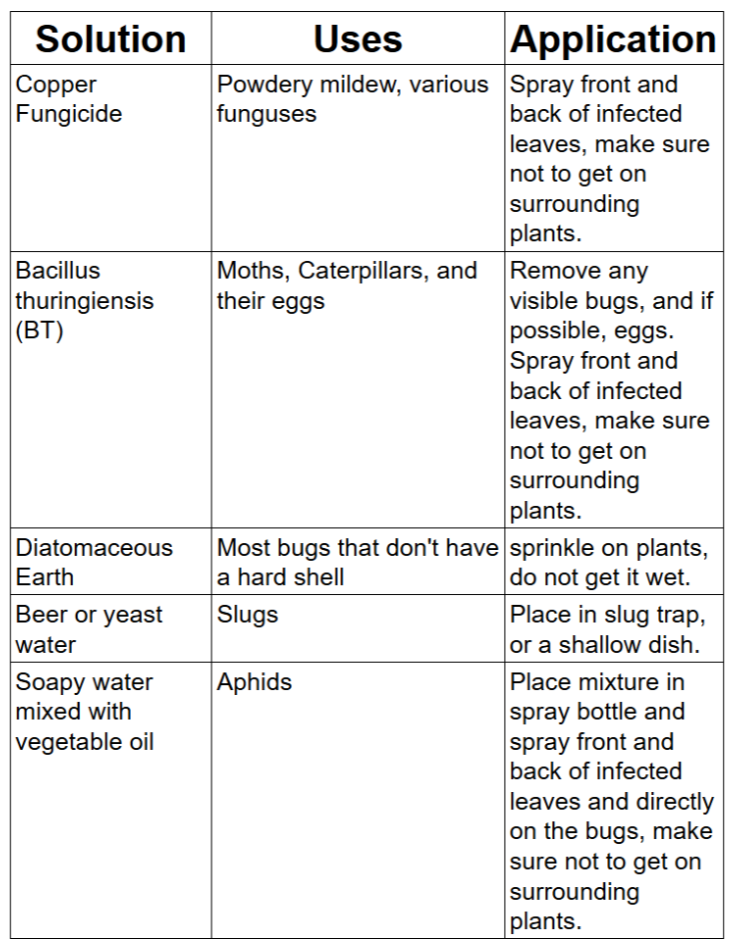
What can start as just a nibble from one bug can result in thousands of eggs hatching and destroying your garden. The best way to prevent this is to squish any bugs or eggs that you see. You can also use natural methods or use organic products that you purchase at the store. White flies or fruit flies can mean your soil is too wet.
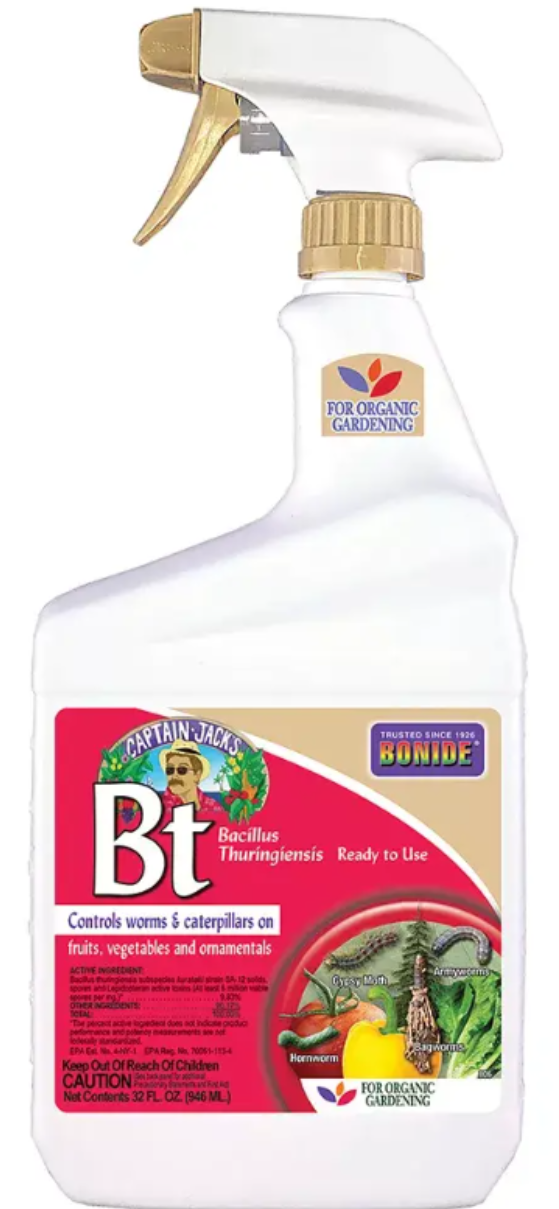
Bacillus Thuringiensis (BT) pest management spray.